
Circadian rhythms
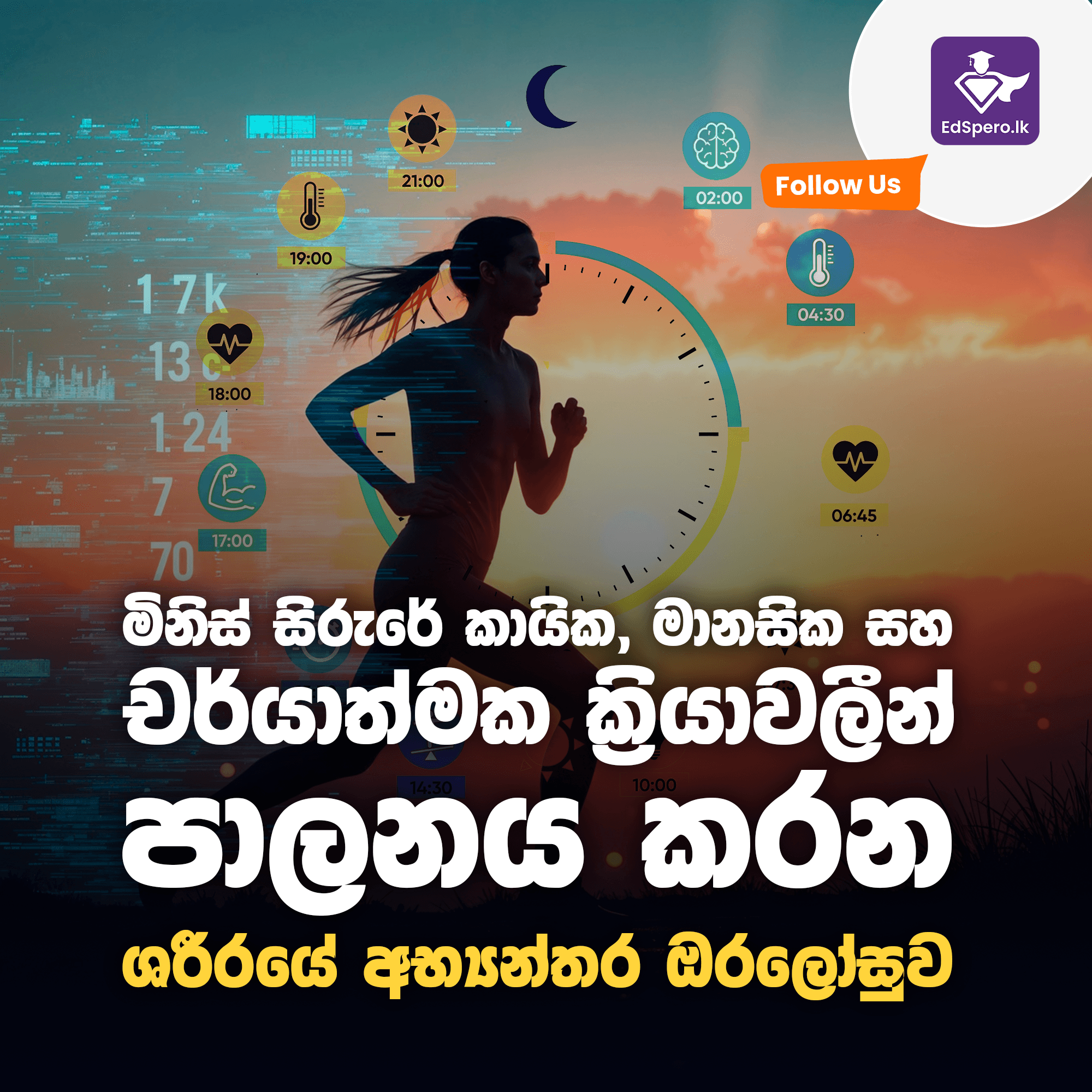
ජෛව රිද්ම: ශරීරයේ අභ්යන්තර ඔරලෝසුව
ජෛව රිද්ම (Circadian Rhythms) කියන්නේ මිනිස් සිරුරේ කායික, මානසික සහ චර්යාත්මක ක්රියාවලීන් පාලනය කරන ස්වභාවික අභ්යන්තර චක්රයක්. දළ වශයෙන් පැය 24ක කාලයක් පුරා දිවෙන මෙම රිද්මයන් පාලනය වෙන්නේ ප්රධාන වශයෙන්ම පරිසරයේ ආලෝකය සහ අඳුර මතයි. අප අවදියෙන් සිටිය යුත්තේ කවදාද, නිදාගත යුත්තේ කවදාද සහ දවස පුරා ශරීරයේ විවිධ පද්ධති ක්රියා කළ යුත්තේ කෙසේද යන්න තීරණය කිරීමට මෙම රිද්ම ශරීරයට උදව් කරනවා. නින්දේ ගුණාත්මකභාවය, ශරීර ශක්තිය, ඉගෙනීම සහ අපගේ සමස්ත යහපැවැත්මට සෞඛ්ය සම්පන්න ජෛව රිද්මයක් පවත්වා ගැනීම අත්යවශ්ය වනවා.
ජෛව ඔරලෝසුව ක්රියාත්මක වන ආකාරය
මෙම ජෛව රිද්ම පාලනය වෙන්නේ අපගේ මොළයේ, හයිපොතැලමසය (Hypothalamus) නම් කොටසේ පිහිටා ඇති 'Suprachiasmatic Nucleus' (SCN) ලෙස හඳුන්වන විශේෂ ස්ථානයක ඇති "ජෛව ඔරලෝසුව" මගින්.
මෙම ඔරලෝසුව ඇස් හරහා ආලෝකය පිළිබඳ තොරතුරු ලබාගෙන, දවසේ දිවා රාත්රී චක්රයට ගැලපෙන ලෙස ශරීරයේ අභ්යන්තර වේලාව සකස් කර ගන්නවා. නින්ද සහ අවදි වීම, හෝමෝන නිකුත් කිරීම, ශරීර උෂ්ණත්වය, ආහාර දිරවීම, අවධානය සහ මානසික තත්ත්වය කෙරෙහි ජෛව රිද්ම සෘජුවම බලපානවා. මෙම රිද්ම නිවැරදිව ක්රියාත්මක වන විට ශරීරය කාර්යක්ෂමව වැඩ කරන අතර, ඊට බාධා වූ විට සෞඛ්යය සහ කාර්ය සාධනය දුර්වල විය හැකියි.
අධ්යාපනය සහ කාර්ය සාධනය (Performance and Education)
මිනිසුන්ගේ කාර්ය සාධනය සහ අධ්යාපනය කෙරෙහි ජෛව රිද්මවල බලපෑම ඉතා ප්රබලයි. දවස පුරා අපගේ අවධානය, මතකය සහ ගැටලු විසඳීමේ හැකියාව වෙනස් වෙනවා. බොහෝ දෙනෙකුගේ මොළයේ ක්රියාකාරිත්වය උපරිම මට්ටමක පවතින්නේ උදෑසන අග භාගයේ සිට දහවල් මුල් භාගය දක්වා කාලය තුළයි. පසුව එය ක්රමයෙන් අඩුවී යනවා. ජෛව රිද්මයට අනුව අවධානය අඩු අවස්ථාවලදී ඉගෙනීමට හෝ විභාගවලට මුහුණ දීමට සිදුවන සිසුන්ට කරුණු මතක තබා ගැනීම හෝ අවධානය යොමු කිරීම අපහසු විය හැකියි. විශේෂයෙන්ම නව යොවුන් වියේ දරුවන්ගේ පාසල් වේලාවන් සහ ඔවුන්ගේ ජෛව රිද්ම අතර නොගැලපීම නිසා දීර්ඝකාලීන නින්ද අහිමි වීම සහ අධ්යාපන කටයුතු දුර්වල වීම සිදු විය හැකියි.
Window of Circadian Low (WOCL)
ජෛව රිද්ම විද්යාවේ එන ඉතා වැදගත් සංකල්පයක් තමයි 'Window of Circadian Low' එහෙමත් නැත්නම් WOCL කියන්නේ. මෙය දවසේ අපගේ අවධානය සහ කාර්ය සාධනය අවම මට්ටමක පවතින කාල පරාසයයි. සාමාන්යයෙන් පාන්දර 2.00ත් උදෑසන 6.00ත් අතර කාලයේදී මෙය සිදුවන අතර, මේ වෙලාවට ශරීරය දැඩිව ඉල්ලා සිටින්නේ නින්දයි. වැරදි සිදුවීම, අනතුරු සහ ඉගෙනීමේ දුෂ්කරතා මෙම කාලය තුළ බහුලව දකින්න පුළුවන්. සිසුන් මෙම කාලය තුළ පාඩම් කිරීම එතරම් ප්රතිඵලදායක නොවන්නේ, මොළය ස්වභාවිකවම ඉගෙනීමට වඩා විවේකයට සූදානම් වී සිටින නිසයි.
ශරීර උෂ්ණත්වය (Body Temperature)
නින්ද සහ අවදිවීමේ චක්රයට ශරීර උෂ්ණත්වයත් ප්රධාන කාර්යභාරයක් ඉටු කරනවා. අපගේ ශරීර උෂ්ණත්වය දවස පුරා වෙනස් වන අතර, එය පාන්දර කාලයේදී අවම අගයක් ගන්නා අතර සවස හෝ රාත්රී කාලයේ මුල් භාගයේදී උපරිම අගයක් ගන්නවා. ශරීර උෂ්ණත්වය වැඩි වන විට අවධානය සහ කාර්ය සාධනය ඉහළ යන අතර, උෂ්ණත්වය අඩු වීම නින්දට සූදානම් වීමට ශරීරයට සංඥා කරනවා. රාත්රියට ශරීර උෂ්ණත්වය ස්වභාවිකවම පහත වැටීම නින්දට යෑම පහසු කරන අතර, උදෑසන උෂ්ණත්වය ඉහළ යෑම පිබිදීමට උපකාරී වෙනවා.
ලක් සහ බකමූණෝ (Larks and Owls)
ජෛව රිද්ම පුද්ගලයාගෙන් පුද්ගලයාට වෙනස් විය හැකියි. මෙය බොහෝ විට "Larks" (උදෑසන ක්රියාකාරී අය) සහ "Owls" (රාත්රියේ ක්රියාකාරී අය) ලෙස වර්ග කෙරෙනවා. Larks හෙවත් උදෑසන පිබිදෙන්නන් දවසේ මුල් භාගයේදී ඉතා ප්රබෝධමත්ව සිටින අතර ඉක්මනින් නින්දට යෑමට කැමතියි. නමුත් Owls හෙවත් රාත්රියේ ක්රියාකාරී වන්නන් දවසේ අග භාගයේදී ප්රබෝධමත් වන අතර ප්රමාද වී නිදා ගැනීමට කැමතියි.
නව යොවුන් වියේ පසුවන දරුවන් ජෛව විද්යාත්මකවම වැඩිපුර නැඹුරු වන්නේ "Owl" රටාවටයි. පාසල් වේලාවන් ඉතා වේලාසනින් ආරම්භ කිරීම ඔවුන්ට අභියෝගයක් වන්නේ මේ නිසයි. ඉගෙනුම් කාලසටහන් සකස් කිරීමේදී මෙම වෙනස්කම් හඳුනා ගැනීම ඉතා වැදගත්.
සාරාංශයක් ලෙස, ජෛව රිද්ම යනු නින්ද, අවධානය, ශරීර උෂ්ණත්වය සහ මොළයේ ක්රියාකාරිත්වය හැඩගස්වන මූලික ජීව විද්යාත්මක පද්ධතියක්. අධ්යාපනයට මෙය සෘජුවම බලපාන අතර, සිසුන් හොඳින්ම ඉගෙන ගන්නේ කවදාද යන්න තීරණය කරන්නේ මෙම රිද්මයි. 'Window of Circadian Low' සහ පුද්ගලික වෙනස්කම් වැනි සංකල්ප තේරුම් ගැනීම තුළින් ගුරුවරුන්ට සහ සිසුන්ට මිනිස් ස්වභාවයට වඩාත් ගැලපෙන කාලසටහන් සකසා ගැනීමටත්, එමගින් යහපත් සෞඛ්යයක් සහ ඉහළ කාර්ය සාධනයක් ළඟා කර ගැනීමටත් හැකි වනවා.
Circadian rhythms are natural, internal biological cycles that regulate many physical, mental, and behavioral processes in the human body. These rhythms follow a roughly 24-hour pattern and are primarily influenced by light and darkness in the environment. They help the body decide when to feel alert, when to feel sleepy, and how various bodily systems should function throughout the day. Healthy circadian rhythms are essential for sleep quality, energy levels, learning, and overall well-being.
Circadian rhythms are controlled by a “biological clock” located in the brain, specifically in a region called the suprachiasmatic nucleus (SCN) of the hypothalamus. This clock receives information from the eyes about light exposure and uses it to synchronize the body’s internal timing with the external day–night cycle. Circadian rhythms influence sleep–wake patterns, hormone release, body temperature, digestion, attention, and mood. When these rhythms are aligned, the body functions efficiently; when they are disrupted, performance and health can suffer.
Circadian rhythms have a strong effect on human performance and education. Alertness, concentration, memory, and problem-solving ability fluctuate across the day based on circadian timing. For most people, cognitive performance peaks during the late morning to early afternoon and declines later in the day. Students who are required to learn or take exams during periods of low circadian alertness may struggle to focus, retain information, or perform at their best. Misalignment between school schedules and biological rhythms—especially in adolescents—can lead to chronic sleep deprivation and reduced academic outcomes.
One important concept in circadian science is the Window of Circadian Low (WOCL). This is the time of day when alertness, reaction time, and performance are at their lowest due to natural circadian processes. The WOCL typically occurs in the early morning hours, roughly between 2:00 a.m. and 6:00 a.m., when the body strongly promotes sleep. During this window, errors, accidents, and learning difficulties are more likely. For students, studying or working during this period is usually inefficient, as the brain is biologically programmed for rest rather than learning.
Body temperature plays a key role in the sleep–wake cycle and circadian rhythms. Core body temperature follows a daily rhythm, reaching its lowest point in the early morning hours and peaking in the late afternoon or early evening. Higher body temperature is associated with increased alertness and better physical and mental performance, while lower body temperature signals the body to prepare for sleep. The natural drop in body temperature at night supports sleep onset, while the rise in the morning helps promote wakefulness.
Circadian rhythms also show individual variability, often described in terms of “larks” and “owls.” Larks, or morning types, naturally feel alert earlier in the day and prefer to wake up and go to bed early. Owls, or evening types, feel more alert later in the day and tend to sleep and wake later. Adolescents are biologically more inclined toward an “owl” pattern, which explains why early school start times can be especially challenging for them. Recognizing these differences is important for optimizing learning schedules and performance.
In conclusion, circadian rhythms are a fundamental biological system that shapes sleep, alertness, body temperature, and cognitive performance. Their influence on education is significant, affecting when students learn best and how well they perform. Understanding concepts such as the Window of Circadian Low and individual chronotypes can help educators, students, and institutions design schedules that better align with human biology, leading to improved learning, health, and overall performance.
Everything here is free
No subscription, no paywall. A free account only saves what you have read.
Create a free account